.jpg)
The Protective Behaviours I’m Less Able to See

How shame, self-image, and deep protection can make some parts of us much harder to recognise

This blog post is a part of my What to Do When You’re Triggered series. Sign up for future reflections in your inbox and get free access to Beyond Blame — a workshop on transforming conflict into connection.
Last week, I wrote about the protective behaviours we may already know something about through inner work and self-reflection.
The ones that reveal themselves because we can feel their cost quite clearly in the pain and discomfort we experience from them.
People pleasing. Freezing in conflict. Leaving the room. Over-explaining and defending instead of listening.
etc…
This week, I want to go a little further into the shadows.
Into the more vulnerable and super-protective parts of ourselves that do not want to be seen.
Not because they are worse.
But because being seen can feel way too naked, raw, and exposing.
Because what they are protecting is so vulnerable that they will do anything to stop us from letting go of that protection or asking them to change the way that they go about it.
Through working with humans (And myself) over the past decade + I have noticed how easily we focus on the behaviours we can stomach. The ones that fit more easily with how we already understand and see ourselves.
And I want to name with care that the questions I raise here are not designed to be forced through. If you’re feeling fragile or overwhelmed as you explore them, please go slowly and seek support if you need it.
Why these parts can be so hard to see
For me, one of the biggest reasons is that they can massively challenge my self-image (for you it may be something else).
If I am willing to truly see a part of myself that uses control, intensity, or even manipulation by putting down my partner and making him smaller… uff.
Even writing that, I feel grief and shame.
Because it is not how I want to behave towards others.
That is not how I want to be seen in the world.
And yet it is somewhere I can go in extreme moments.
Not in all relationships.
Not very often these days.
But in moments when my nervous system feels deeply under threat, and I am far inside my worst trigger story, that is a place I can go.
For me, this tends to happen when a deeper pain story gets directly hit.
E.G: When the part of me that believes, my needs will not matter to you unless I make you feel the pain I am feeling, gets activated by someone disappearing, becoming unavailable, questioning my pain, or explaining why it doesn’t count… then boom. Direct hit.
These days, I can often feel that hit coming. I have much more awareness and capacity than I once did.
And still, that controlling or manipulative part can come out when that direct hit has happened more times than she can bear in a certain relationship.
When the need to be seen, understood, and to matter goes chronically unmet, she becomes fierce.
And this is what was so hard for me to see or admit to myself, especial after years and years of inner work.

It was easier to see my pain than to see what I was doing from inside that pain.
It was easier to see the part of me that was hurt and anxious and therefore over-giving, over-listening, losing herself and her needs in order to “keep” the connection close.
Much harder to see the deeper layer. The one that wanted him to yield. The one that made him smaller. The one that wanted to force understanding and recognition.
I don’t think I really saw that part clearly until my ex-husband reflected it back to me after we had split up. Without that feedback, I think I might have stayed lost in the story that he was the main problem and I was an enabler. How easily that fits the image of myself as a kind and compassionate person who maybe loses her way by giving too much and trying to save people...
These parts are hard to see not because we are shallow or unwilling, but because seeing them asks a lot of us. They challenge our self-image, they can feel justified in the moment, they are deeply protective of a raw and vulnerable part of ourselves and often their effect is more painful and obvious to the other person than to us.
Compassion for the part that made the contract to protect me

It matters so much to me that we look at these parts with compassion.
I know how much that younger part of me experienced humiliation, hurt, frustration, and the agony of not being heard or understood far too many times.
Of course she made an unbreakable contract.
Of course she said, next time, we will say this and then they will understand. Next time, we will not let them do that to us. Next time, we will make sure they realise how hurtful this is.
I literally remember having those little conversations with myself as a child.
So no, I do not want to meet these parts with blame. I don’t want to demand they transform overnight.
The little human inside of me who created that contract deserves respect. She deserves space. She deserves time.
These behaviours protect something deeply vulnerable.
And for me, the work is not to judge them. It is to see them. To understand them. To bring enough honesty, care, and responsibility that they do not have to stay so hidden.
A few questions, if you want to look
If you feel called to look at these more hidden parts of yourself, maybe these questions can help:
Thinking of past conflicts, which moments of my own behaviour do I most prefer not to look at?
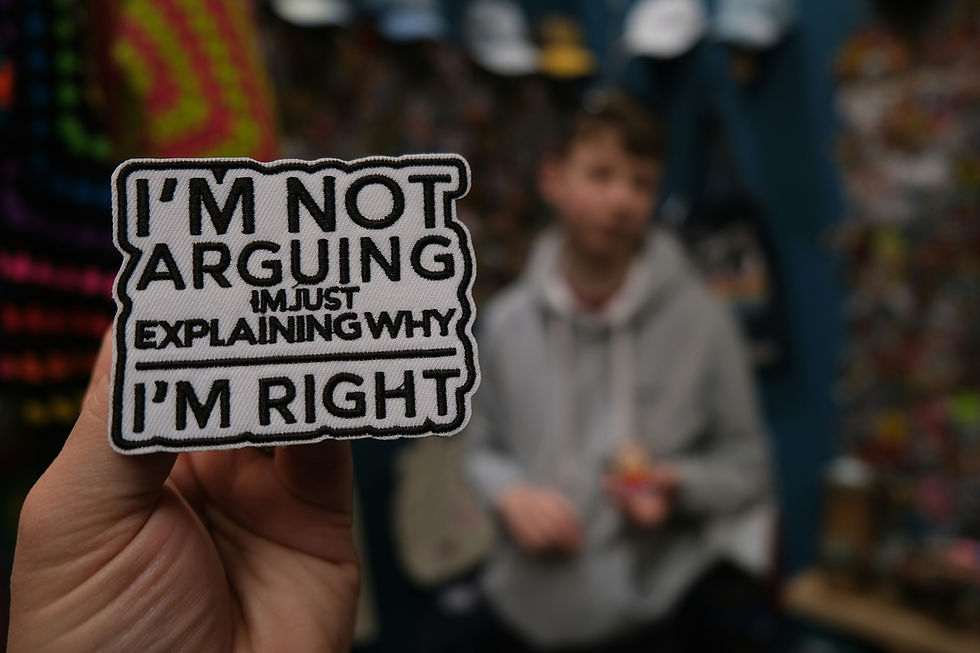
Is there anything in me that feels uncomfortable enough that I would rather explain why I behaved that way than really look at what I did?
When I have felt deeply hurt, angry, embarrassed, humiliated, or flooded, what do I remember doing in those moments?
If nobody would ever judge me for the answer, what might I admit I do to protect myself from further hurt?
And So..
We do not need to see everything at once.
And I don’t think these parts reveal themselves through force anyway.
Sometimes the beginning is simply catching one edge. One strange moment. One behaviour that doesn’t quite sit right. One protective move that suddenly looks different when the heat has gone down.
That matters.
That is often enough to begin.
…………………………
***With respect and thanks to some of the people, approaches, and bodies of work that have deeply shaped both my own inner explorations and the way I support others: Marshall Rosenberg and Nonviolent Communication, Yoram Mosenzon’s work in NVC, mediation, and body awareness, Sarah Peyton’s work in neuroscience and empathy, Attachment Theory, Internal Family Systems, Emotionally Focused Therapy, Restorative Practices, and many more besides.


Comments