.jpg)
When Hurt Hardens Into Blame

Updated: Jun 3
How pain stories can muddy our boundaries and make it harder to ask clearly for what we need
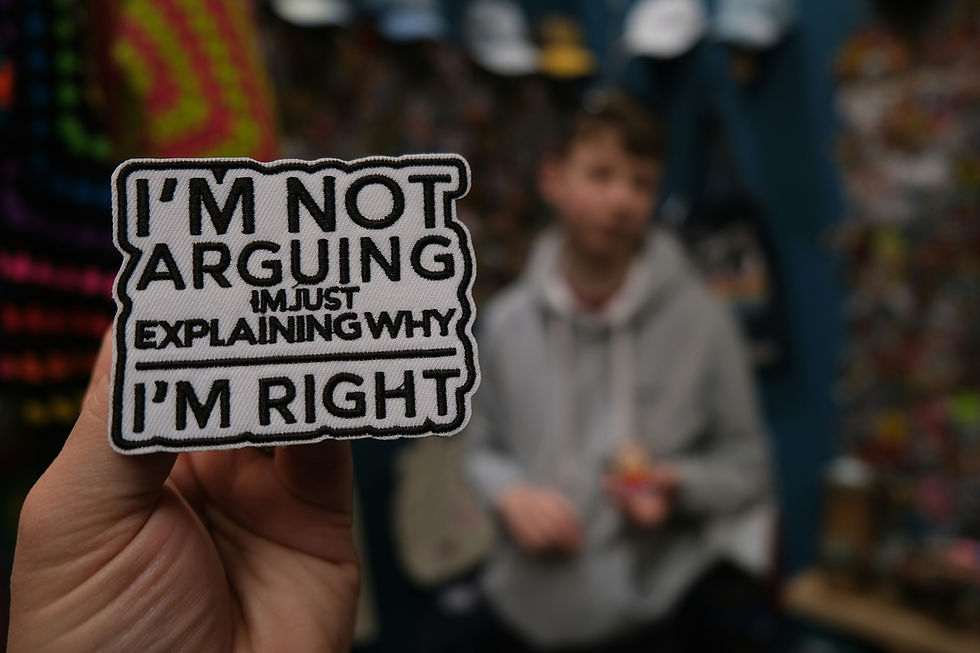
I’ve recently been “joyfully” re-acquainting myself with parts of my internal defence system that can find it easy, when in conflict with someone I love, to build a story about them that starts to feel solid and true (particularly familiar pain stories that I see repeatedly popping up in my romantic relationships).
You don’t care about me. My needs don’t matter to you. You always put yourself first.
I’m using one of my own familiar pain stories here to show how blame can muddy my boundaries, distort my requests, and even self-sabotage the very connection, care, or change I most long for. But you may carry a very different story of your own.
It might sound more like:
there’s no point in me sharing
my voice doesn’t matter here
you never share anything real
you don’t see how much I do for you
I’m always the one carrying this
you only care when it affects you
I can’t rely on you
I have to do this alone
you’ll never really hear me
if I soften, I’ll be the one who gets hurt
Once I’m inside that story, more and more of what you do or don’t do can get filtered through it.
My interpretations about you harden. My evidence against you builds. And before long, I’m no longer relating to you; I’m relating to the robust story in my head that I’ve built about you.
And honestly, that story can feel like a cold metallic armour, protecting my fleshy, vulnerable organs beneath.

Because if I’m certain you don’t care, then I do not have to sit in the vulnerability of not knowing if you do. I do not have to ask again, clearly, for what I want or need in this relationship. I do not have to risk hoping, opening, or being hurt again. I do not need to do the harder work of being clear and compassionate with my boundaries.
That makes sense to me.
Especially when there is truth in the hurt. Especially when the other person really has behaved in ways that feed the old wounds within me.
That’s what makes this so hard.
Sometimes I’m looking at the present moment with you through an old painful story from my past. Sometimes the present moment, and your actions or inactions, really are hurting me.
And often it’s both… that’s what can be confusing.
But what I keep seeing is this:
When I carry my boundary through blame, the boundary itself starts to get lost.
The request gets muddy. The need gets buried. And what I most long for: openness, care, understanding, respect, partnership, movement — becomes much harder to create.
Instead of saying clearly what matters to me, blame starts doing the talking.

And then, even if some truth lives in what I’m saying, the tragedy is that it becomes much harder for the other person to hear or meet me at all. And so my pain story becomes even more real; it becomes my lived experience even more than it did before… and of course then, it reinforces the evidence I am building against you. And so, you see, the spiral can quite quickly become a vortex.
For me, the shift starts with being willing to see the story I’m holding as the truth.
To say to myself:
I am judging. I am believing my interpretation is the whole truth. I am hurt, and I am deeply armoured.
And then to ask:
What am I holding as evidence?
What is this blame helping me avoid?
What am I actually needing here?
What am I saying no to?
What would a clear request sound like if I kept the boundary but put down the blame?
Because taking responsibility for my story does not mean pretending I’m not hurt or angry. It does not mean saying the other person has done nothing painful. And it does not mean dropping my needs.
It means seeing what I’m adding to the mix.
And from there, trying to let the boundary stand on its own without blame to back it up.
And often this is where my boundaries, or care for my needs, are respected so much more. Because I am taking full responsibility for them. I am saying what I need, and what I am open for.

Not perfectly. Not without emotion. But more clearly and respectfully.
Because for me, this is a big part of the way through:
Not letting blame carry my boundary for me.
Letting the boundary stand on its own.
If this piece touches something tender, stuck, or familiar in you, and you’d like support untangling the story, the hurt, and the boundary underneath it, I’m currently offering Clarity in Sticky Places — a short series of sessions for individuals and couples who want help finding their way through relational fog, conflict, or repeated pain patterns with more honesty, care, and clarity.
You can read more about it HERE.


Comments