.jpg)
Catching Conflict Before You Spiral

How to pause, check your capacity and find more choice before disconnection takes over
This blog post is a part of my What to Do When You’re Triggered series. Sign up for future reflections in your inbox and get free access to Beyond Blame — a workshop on transforming conflict into connection.
A simple toolkit to support you before conflict hijacks your ability to choose wisely.
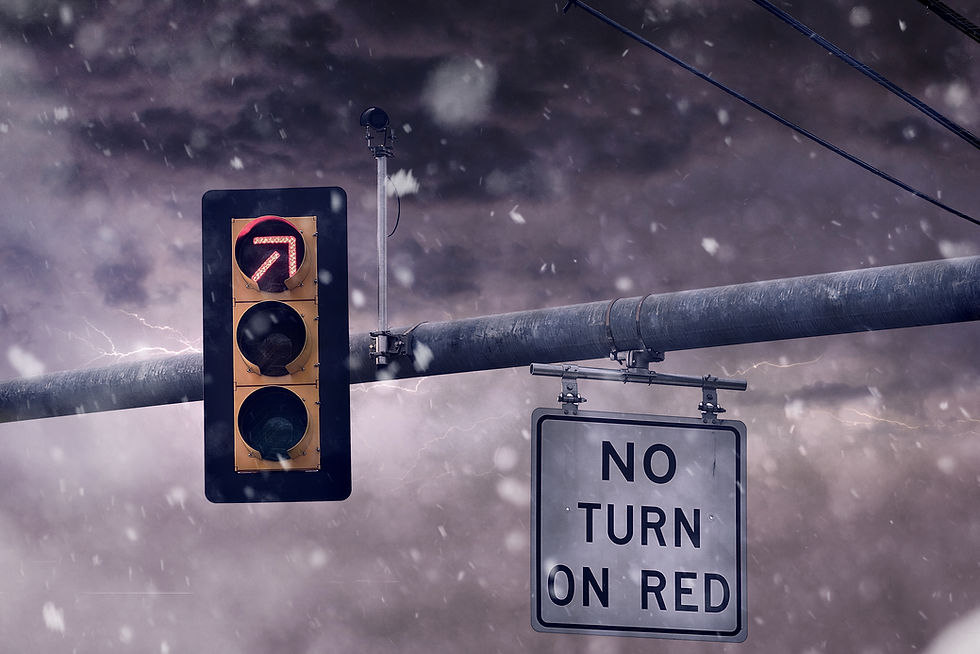
One of the simplest tools my partner and I have used in conflict is a traffic-light system.
Green means I feel settled enough to stay connected.
Orange means I’m activated, but I still have some access to choice.
Red means I’m flooded, deeply defended, or no longer able to communicate in a way that is helpful to either of us.
Because we both know the system, we often don’t need many words when using it. Saying, “I’m on orange,” can sometimes be enough to mean: I need to slow down, breathe and reconnect with myself before we keep going. This is in service of our connection.
Of course, we have also noticed orange many times and carried on anyway.
Sometimes we were already closer to red than we realised.
The real practice for us has been learning to notice an orange “signal” as early as possible.
What does orange look like for you?
For me, orange can look like building frustration, annoyance, tension beginning to rise in my chest, judgement in my tone, impatience, or feelings of unease and worry in my stomach. I may feel an urge to defend myself, correct the other person or push harder to be understood.
But when I stop and notice, I still have some awareness of what is happening within me. I may still be able to pause and remind myself of my wishes and intentions, so that I can make choices about how to proceed in the conversation.
Red feels very different.
By the time I’m in red, my perspective has narrowed. I may be flooded with anger, hurt, shame or desperation. Listening and staying curious becomes impossible. I am already in full reactivity, and even if a glimpse of self-awareness pops in to say, “Hey Emma, you are in red,” it is not impossible, but it is much harder for me to stop myself from spiralling than when I am in orange.
Your orange and red may look very different from mine.
If you tend towards fighting back in conflict, orange might look like irritation, interrupting or preparing your response while the other person is still talking. Red might look like shouting, attacking or feeling unable to stop pushing.
If you tend towards flight, meaning leaving the situation, orange might feel like restlessness or an urgent wish to leave. Red might look like abruptly walking away or shutting the conversation down.
If you tend towards freezing up in conflict, orange might feel foggy, quiet or hard to put into words. Red might feel like disappearing inside yourself completely and, in some cases, not being able to move or speak.
If you tend towards fawning, or people pleasing, orange might look like quickly apologising, worrying that they do not like you or fearing that they will get angry. It can come with an urgent need to fix the situation.
Red might mean abandoning your own experience completely in order to keep the connection safe. This could look like agreeing with them entirely and forgetting yourself, or focusing on calming the other person down and attending to them while something in you feels stressed, unsettled or worried.
These responses can overlap. The important thing is simply to begin noticing:
What signals, feelings, emotions, sensations, thoughts or actions tell me I’m on orange?
What signals tell me I’ve already moved into red?

What helps me when I notice orange
1. Pause internally
Sometimes the first thing I do is take one breath and stop engaging for a moment.
I may do this silently while the other person is still speaking.
I’m not trying to ignore them. I’m trying to stop adding more fuel while I find my footing and regulate my nervous system enough to see what is happening.
2. Create some space
If one breath is not enough, I may say that I need a moment.
I might go to the toilet, step to the other side of the room or briefly leave the conversation.
Sometimes I simply say:
“I’m on orange. I need a moment. I’ll be back in a few minutes.”
This may trigger the other person more, and that does not automatically mean it is the wrong choice.
I need to take care of myself first in order to care for the relationship and return in a way that is actually helpful.
The key to caring for connection here is to make it clear that I am leaving in order to care for our connection, rather than allowing us to spiral further into conflict. I also let them know that I am coming back, even if, when I return, I realise that I need to take more time to myself.
3. Remind myself that I still have a choice
Once there is even a little space, I remind myself:
I can keep spiralling, or I can stop here and choose what happens next.
I’m not looking for the perfect response.
I’m trying to recover even five per cent more choice and responsibility.
4. Check my capacity
Then I ask:
Do I actually have the capacity to listen right now?
Often conflict continues because both people are full, activated and trying to be heard at the same time.
Someone may need to listen first.
But listening is only useful when it is a genuine choice, not something I force myself to do while resentment grows underneath.
If some curiosity has returned and I feel able to temporarily park my own experience without abandoning it, knowing that I can come back to myself after hearing you, I may choose to listen first.
I can trust that my turn still matters, and that listening fully now is a choice I am making in service of our connection.
If I’m too full to listen, too defended or too desperate to be heard myself, pretending to listen will most probably not help either of us at all.
I can ask:
“Do you have capacity to listen to me first?”
Or I can ask for a real break. I can find another place to be heard, journal, meditate, shake, go for a run, have a cold bath, or do whatever I need in order to become clearer about what is happening in me, so that I can return with more space and clarity.
So the sequence is:
Notice orange. Pause. Self-connect. Check capacity. Choose who listens first, or take a break.
You do not need to try all of this at once.
Choose just one thing to experiment with in your next conflict.
Notice one early sign.
Take one breath.
Say, “I’m on orange,” if you have agreed to use that language, or choose another word that works for you.
Ask yourself whether you genuinely have capacity to listen.
Then reflect afterwards:
Did that give me even a little more space or choice?
Orange is not a failure.
It is information, and a real opportunity for connection.
Conflict is, quite literally, an opportunity for connection. It is the moment when we both have something precious and important to share.
If we can become open to these gifts, conflict can support us to become closer. It can help us move beyond different opinions and towards curiosity and care for what we each hold so dearly that we may defend it with every last cell in our body, even if that defence looks like freezing, turning away or people pleasing.
The earlier I recognise that I am in conflict, the more chance I have of caring for myself, the other person and the relationship before the spiral carries us both into a sea of red.
Red is not impossible to come back from, but it is often where the most damage is done in our relationships.
I will come to that in my next post in this series (we are coming close to the end..):
What happens if you have already hit red? How can we repair and reconnect after rupture?
If this piece feels familiar, and you would like support noticing what happens when conflict starts to take over, I’m currently offering Clarity in Sticky Places, a short series of sessions for individuals and couples who want help slowing the spiral, understanding what is happening underneath it, and finding more choice, care and clarity in difficult conversations.
You can read more about it here:


Comments